Original article excerpt
Server-side extracted preview paragraphs from the original source.
A ye
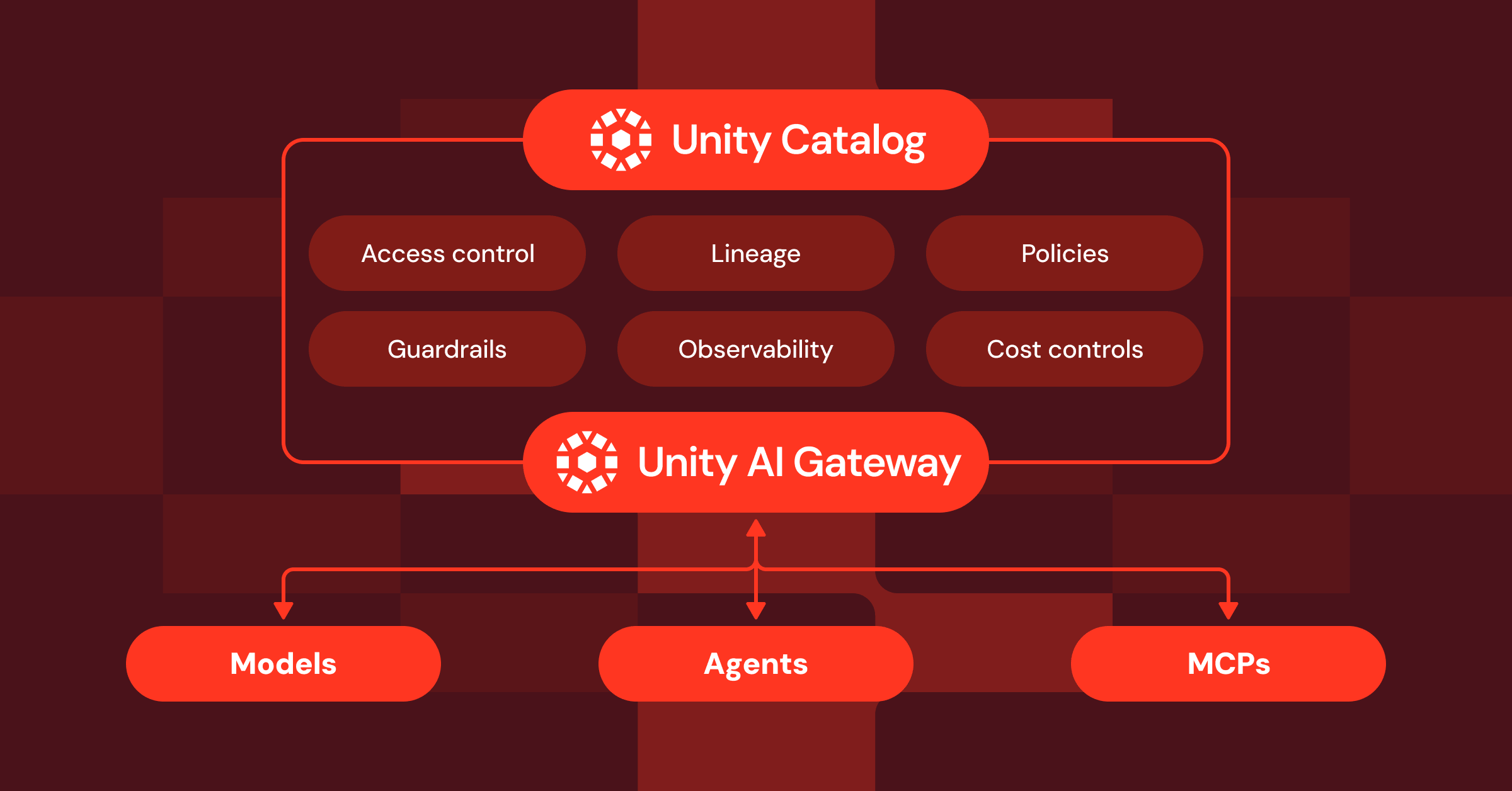
• AI governance is fundamentally a data governance challenge. By combining lineage, audit logs, inference traces, data quality monitoring, and classification in the lakehouse, organizations can securely govern AI systems while improving observability, compliance, and trust. • Unity Catalog and Unity AI Gateway provide a unified governance layer for AI agents, models, MCP servers, and data — enforcing identity-aware access, runtime policies, guardrails, and full auditability across every agent interaction. • Open standards and interoperable governance allow enterprises to govern any model, framework, or agent platform consistently. Unity Catalog and Unity AI Gateway centralize policies, observability, and cost intelligence across Databricks and third-party AI ecosystems
A year ago, your organization had a dozen AI agents. Today, there are thousands.
Every developer has a coding agent that writes, reviews, and ships code alongside them. Your analytics team built forecasting agents. Sales operations deployed lead scoring. The Support organization automated ticket routing. Marketing launched personalization. Finance built reconciliation workflows. Every team saw an opportunity and moved fast.
The answer requires pulling logs from dozens of systems, manually correlating them, and hoping nothing was missed. Each agent logs, authenticates and accesses data differently. There's no single place to look.
Or maybe you took the opposite path. You locked everything down. No agents got deployed without extensive review. Security stayed tight. But now you're six months behind competitors who moved faster. Developers and users are frustrated. Some have left for companies where they can actually use AI tools.
Neither extreme works. Ungoverned agents create risk you can't measure. Locked-down environments create a different kind of risk: falling behind while talent walks out the door.