Original article excerpt
Server-side extracted preview paragraphs from the original source.
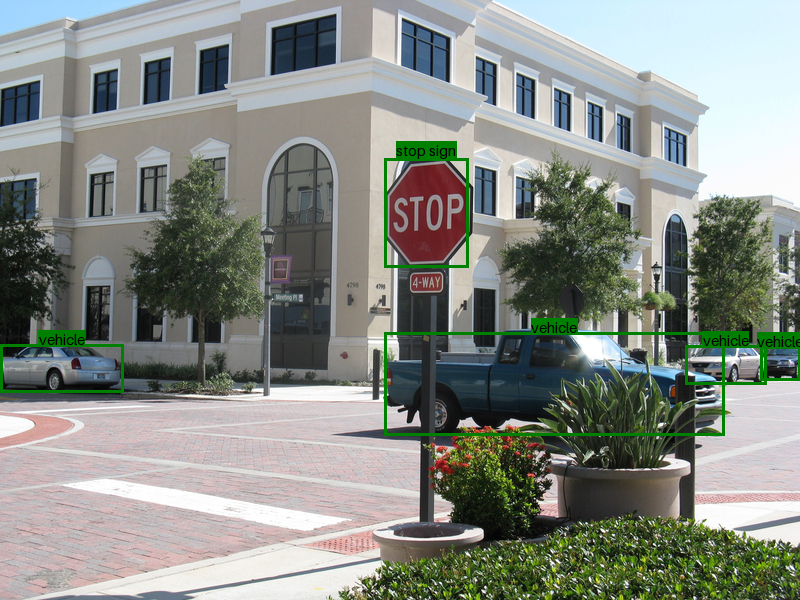
In this post, we'll walk through implementing object detection with Amazon Nova 2 Lite. You'll learn how to deploy an object detection application using Amazon Bedrock, AWS Lambda, and Amazon API Gateway. You'll also learn how to craft effective prompts, process structured JSON output, and visualize results. We explore practical applications across manufacturing, agriculture, and logistics.
Traditional computer vision solutions can require significant upfront investment. Setting up data pipelines, model training infrastructure, compute resources, and a dedicated data science team is often prohibitive for small companies or teams. Amazon Nova 2 Lite, available through Amazon Bedrock, provides an appealing alternative solution. This multimodal foundation model detects objects through natural language prompts with no training required. Specify “vehicle”, “person”, or “dent”, and Nova returns precise bounding box coordinates in structured JSON format.
In this post, we’ll walk through implementing object detection with Amazon Nova 2 Lite. You’ll learn how to deploy an object detection application using Amazon Bedrock, AWS Lambda, and Amazon API Gateway. You’ll also learn how to craft effective prompts, process structured JSON output, and visualize results. We explore practical applications across manufacturing, agriculture, and logistics.
The object detection solution uses four main steps to identify and localize objects in images.
You send an image and a list of objects to detect through Amazon Bedrock’s Converse API. Amazon Nova 2 Lite analyzes the image and returns a JSON response with bounding box coordinates for each detected object. You then convert the normalized coordinates (0-1000 scale) to pixel positions based on your image dimensions. Finally, you visualize results by drawing bounding boxes on the original image.
Deploy object detection in as little as hours – no model training, machine learning (ML) expertise, or infrastructure management required.
Prompt engineering plays an important role in achieving accurate detections. The prompt template (shown in the following example) contains a carefully crafted instruction set that specifies key requirements. Two variables in the prompt template: elements and schema are dynamically constructed based on detected object types, allowing the prompt template to handle arbitrary object categories without modifications.