Original article excerpt
Server-side extracted preview paragraphs from the original source.
Howden Group CDO Barry Panayi on why the one-product-per-use-case model gets clunky at scale and why insight lag is the metric your strategy is actually optimizing for.
The traditional enterprise data playbook assumes a certain pace. You design a strategy, you build the platform, you onboard sources methodically, and you stand up products for each major use case. The plan is the artifact, and the artifact is built to last.
That playbook is being stress-tested in a way it was not designed for. Companies growing through acquisition, building agent-based workflows, and absorbing new data sources at speed are discovering that strategies built for a slower era become constraints on the business itself. The architecture, taxonomy and operating model that worked at one pace start to actively work against the next one.
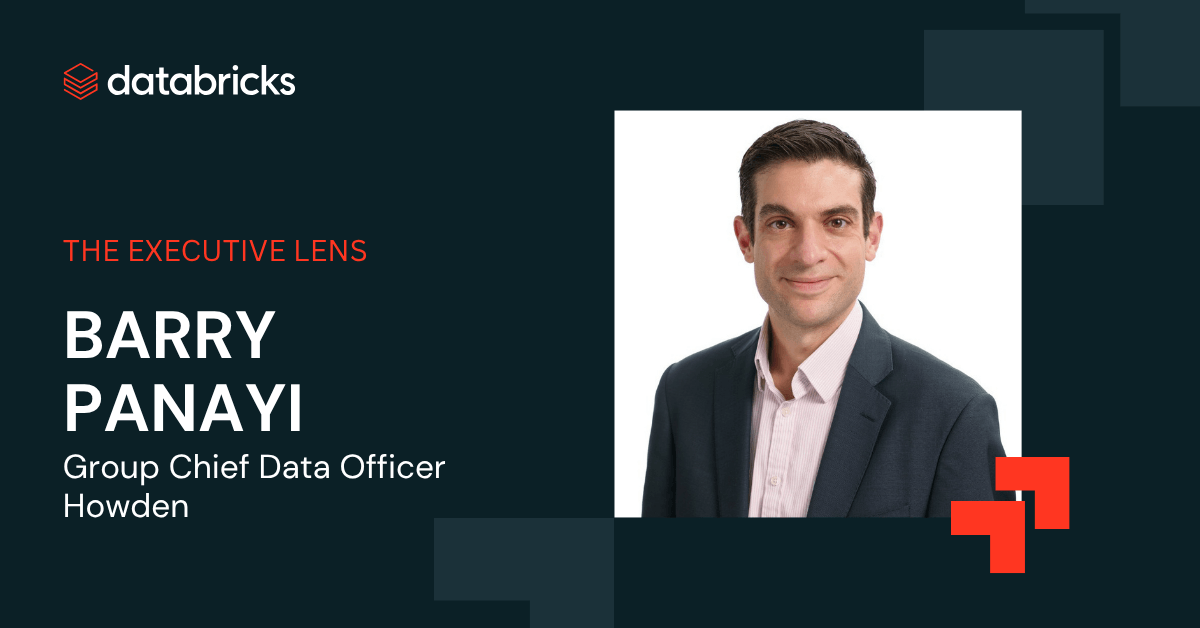
Barry Panayi is Group Chief Data Officer at Howden, a global insurance broker, underwriter and reinsurer operating in over 50 countries with 25,000 employees. Five years ago, the company had 10,000 people. Last year, it acquired more than one business per week. Howden runs its enterprise data platform on Databricks, consolidating over 100 sources of record into a unified architecture that supports everything from regulatory reporting to conversational analytics through Databricks Genie.
In this blog, Barry discusses how traditional design choices will not work for where AI consumption is heading. The product model gets clunky. The reconciliation cycle gets expensive. The dashboard backlog becomes the bottleneck. Below, Barry makes the case for what to build instead.
Aly McGue: You mentioned that the one-product-per-use-case model starts to break down at a certain point. What do you mean by that, and what replaces it?
Barry Panayi: I have begun to see that this model gets clunky. If you think about your data layer as a set of open, governed services, it becomes much more adaptable to whatever AI demands come next.