What happened
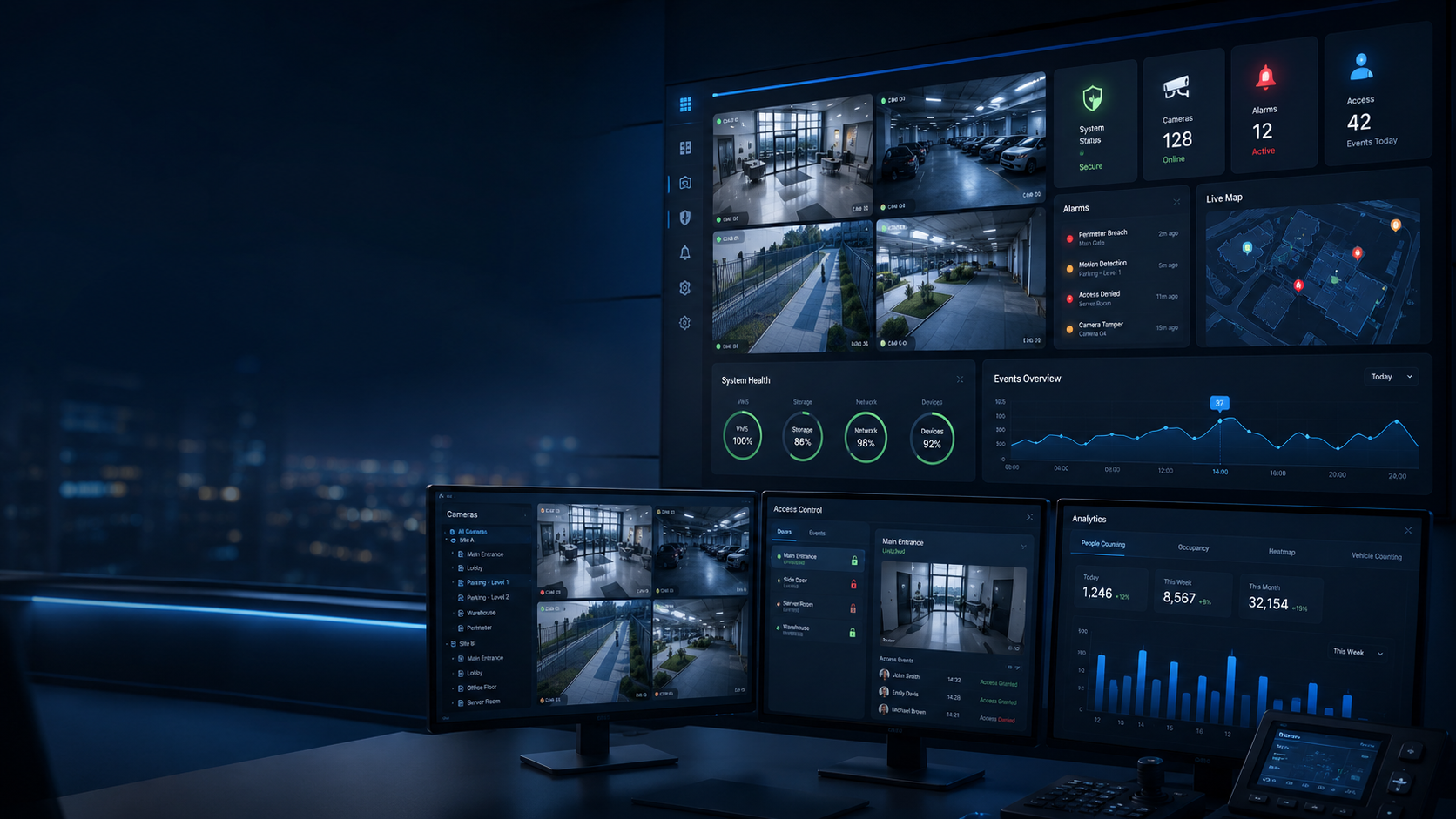
I build operational dashboards that connect CCTV, VMS, alarms, access control, and analytics without replacing the systems that already work.
AI BriefWire / Briefing
I build operational dashboards that connect CCTV, VMS, alarms, access control, and analytics without replacing the systems that already work.
A structured operator read: what happened, why it matters, who is affected, and what to watch next.
I build operational dashboards that connect CCTV, VMS, alarms, access control, and analytics without replacing the systems that already work.
Integrating disparate security systems into a unified dashboard simplifies complex operations and enhances situational awareness for operators.
A unified dashboard improves operational efficiency, reduces response times, and enables better decision-making by consolidating data from multiple security platforms into a single...
Teams tracking Code AI, AI Development, product strategy, operations, and market positioning.
Founders and product leaders should explore building or adopting integration layers that normalize data across security systems to create cohesive, user-centric operational dashboards.
Founders and product leaders should explore building or adopting integration layers that normalize data across security systems to create cohesive, user-centric operational dashboards.
Full text of the AI BriefWire opinion piece.
When people hear the word dashboard, they usually imagine charts, status cards, and camera views on a large screen. In my work, the interface is only the visible part. The real challenge is connecting systems that were never designed to work together. A typical security environment may include a VMS, IP cameras, access control, alarm systems, video analytics, parking software, servers, and storage monitoring. Each platform has its own API, identifiers, event formats, and terminology. My job is to bring that information into one practical operational view.
I Start With the Real Workflow I do not begin by choosing colors or a chart library. I start by asking what the operator actually needs to understand. Is a loading bay open? Is there a vehicle in front of it? Was access authorized? Is the camera online and recording? Has the condition continued long enough to require attention? These answers may come from several different systems. The alarm platform knows the state of the door sensor. The VMS manages video and recording. Analytics may detect a vehicle or person. Access control knows whether someone was authorized to enter. For the operator, however, all of this relates to one physical location. A useful dashboard connects those signals and presents a clear situation instead of a collection of unrelated technical statuses.
I Do Not Try to Replace the VMS A modern VMS already handles live video, recording, archives, permissions, camera drivers, and many other specialized tasks. Rebuilding all of that inside a custom application would rarely make sense. Instead, I keep the VMS as the video core and build an additional operational layer around it. This layer can provide: a unified system overview; equipment health monitoring; custom alarm workflows; links between video and external sensors; customer-specific reports and analytics. Each system continues doing what it does best. My dashboard connects the results.
Creating a Common Language One of the most important parts of the integration is normalizing the data. The frontend should not need to understand how every manufacturer describes a device failure or alarm. I use a backend integration layer that collects information from different sources and converts it into a common internal format. This makes the interface easier to maintain and allows new systems to be added without redesigning the entire application. It also helps when several platforms describe the same physical object differently. A camera, a door sensor, an access reader, and an analytics zone can all be linked to one logical entity such as “Loading Bay 03.” The dashboard can then show something meaningful: Loading Bay 03 has been open for 12 minutes. No valid access event was found. A vehicle is present, and the overview camera is recording. That is far more useful than showing four separate indicators.
“Online” Is Not Always Healthy A green status does not necessarily mean that everything is working. A camera may respond to ping but fail to provide an RTSP stream. The stream may be available while recording is stopped. The VMS may see the camera, but the storage server may be full. For this reason, I prefer multi-layer monitoring. Depending on the project, I may check network availability, RTSP, ONVIF, recording status, archive availability, server processes, and storage capacity. The interface can still remain simple. Operators see a clear summary, while engineers can open the detailed diagnostics when needed.
The Final Goal A good dashboard is not just a collection of charts. It is a translation layer between technical systems and human decisions. Operators get one interface instead of switching between several applications. Engineers can find the source of a problem faster. Managers receive reports based on consistent, normalized data. The existing systems remain in place, but they become easier to operate as one environment. That is the type of dashboard I build: not a replacement for every platform, but a practical layer that connects CCTV, VMS, alarms, access control, and analytics into one understandable operational picture.