Original article excerpt
Server-side extracted preview paragraphs from the original source.
A Blog post by Ai2 on Hugging Face
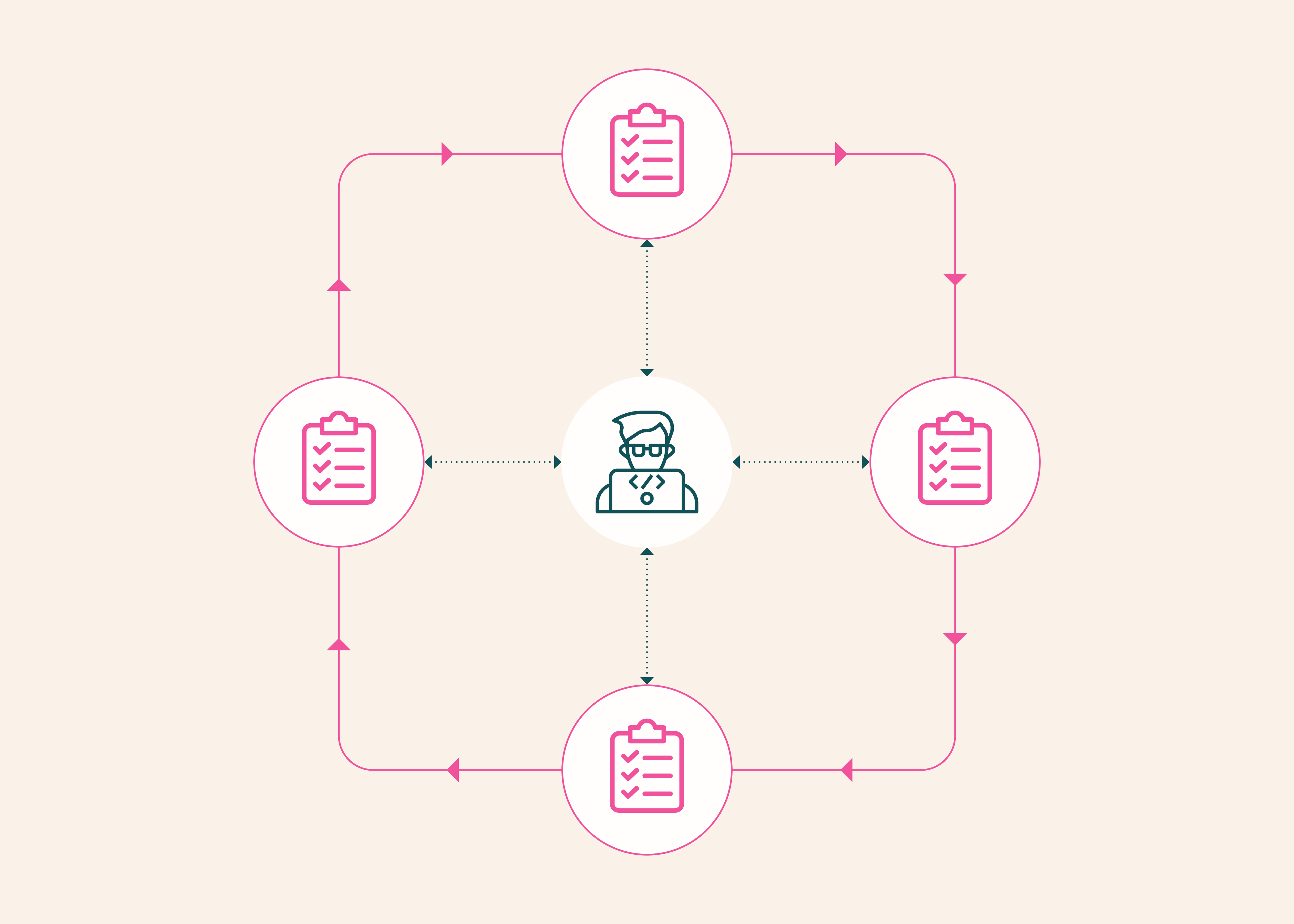
While you're building an LLM, you evaluate it over and over across many interventions. Every adjustment to its data, architecture, or hyperparameters — and every step up in scale — sends you back through the same loop: adding or reconfiguring benchmarks, re-running them on each new model checkpoint, noting the results, and checking whether something that helped in a small experiment still holds up on the full training run.
Most evaluation tools aren't designed for this—they’re either built to run established benchmarks across finished models or run a model through multi-step, tool-using problems in a sandbox. They don’t keep up with a model that's constantly changing, nor do they reflect how a model might behave under specific real-world conditions.
Our last project to address this evaluation challenge was OLMES, the Open Language Model Evaluation Standard. Introduced in 2024, it was meant to make LLM benchmark scores easier to compare across releases. The same models were being scored on the same benchmarks in different ways — aspects like prompt formatting and task formulation often varied from paper to paper — so claims about which models performed best often weren't reproducible. OLMES pinned benchmarking choices down in an open, documented standard, and it became the basis for evaluating our open models from Olmo to Tulu.
But a model's final score is only part of the evaluation process—which is why we're releasing olmo-eval, a new workbench that builds on OLMES and extends it across the rest of LLM development. Compared to OLMES, olmo-eval cuts down the work of implementing new evaluations, offers more flexibility in defining where and how they run, and makes it easier to compose individual components into larger workflows. Agentic and multi-turn evaluation is supported as a first-class use case, and stronger analysis tools help you judge whether an intervention actually improved on the baseline or the difference amounts to noise.
olmo-eval overlaps in some ways with Harbor, an open framework for evaluating AI agents inside containerized, sandboxed environments. But the two tools differ in their scope. Harbor is aimed mainly at running and publishing agent benchmarks; olmo-eval was built for the everyday work of developing a model—adding and configuring benchmarks, running them across checkpoints, and analyzing the results prompt by prompt instead of as a single overall score.
Harbor runs everything the same way—inside sealed, reproducible containers. Because containers can be resource-intensive, olmo-eval lets you choose how each benchmark runs instead. A benchmark that just needs a model to answer questions can run directly, which is faster and cheaper; a benchmark that needs a locked-down environment — say, one that runs code the model wrote — gets an isolated container setup. The lightweight path is the default, and olmo-eval only opts for the heavy setup when a benchmark actually requires it.