Original article excerpt
Server-side extracted preview paragraphs from the original source.
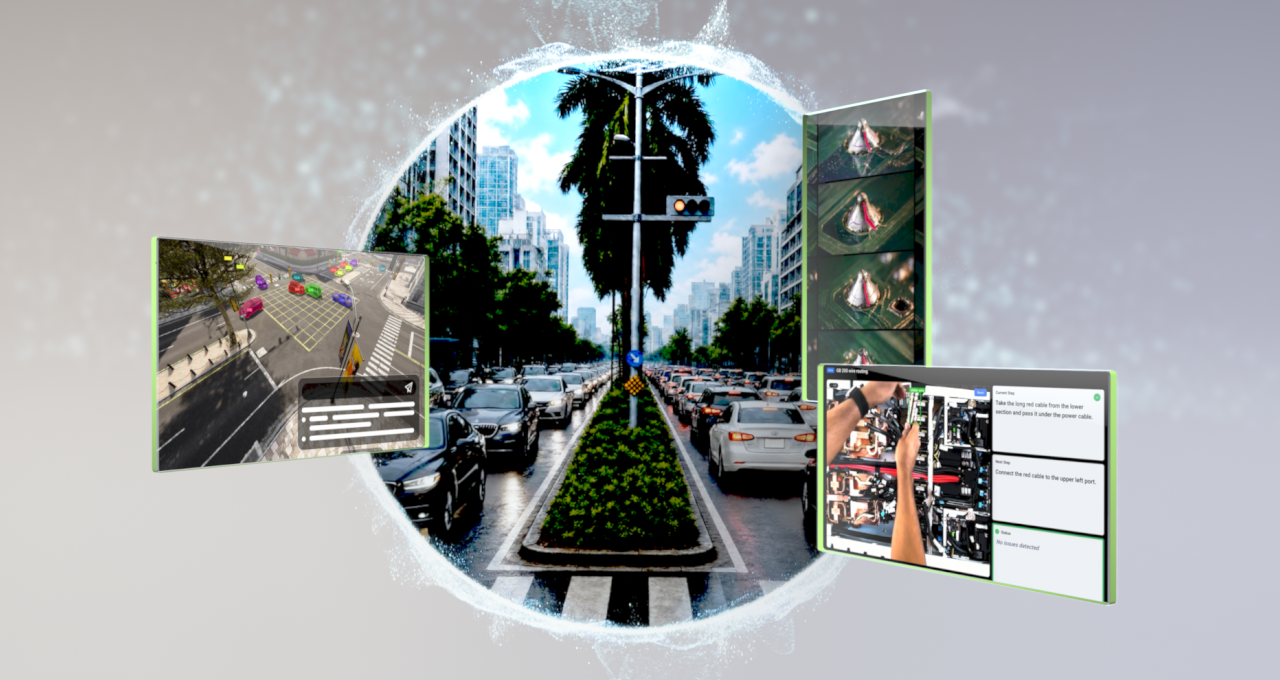
Vision AI agents are becoming a practical way to automatically turn video data from the physical world into operational intelligence in factories, cities, warehouses and transportation systems.
Editor’s note: This post is part of Into the Omniverse, a series focused on how developers, 3D practitioners, and enterprises can transform their workflows using the latest advances in OpenUSD and NVIDIA Omniverse.
Vision AI agents are becoming a practical way to automatically turn video data from the physical world into operational intelligence in factories, cities, warehouses and transportation systems.
That shift is accelerating as more AI workloads move closer to where data is generated. Gartner projects that more than two-thirds of enterprise-managed data will be created and processed outside the data center or cloud by 2028, and that over two-thirds of all enterprises globally will deploy edge AI by 2029, up from 10% in 2025 (1).
But more edge data doesn’t automatically create more intelligence. As much as 90% of existing edge data goes unprocessed, according to the same Gartner report. Turning that data into useful action requires vision AI agents that can understand video, adapt to real-world conditions and connect insights to operational workflows. These agents often run near cameras, machines and sensors, where models must meet latency, power, cost and connectivity requirements while adapting to site-specific conditions. To build those agents, developers need repeatable ways to generate training data, fine-tune models and deploy agentic video applications across edge and cloud environments.
NVIDIA Metropolis agent skills and blueprints give developers reusable workflows to build, operate and optimize vision AI agents across that lifecycle.
For the simulation and synthetic data side of that work, Universal Scene Description, or OpenUSD, provides a common framework for describing, composing and reusing 3D worlds. Built on OpenUSD, NVIDIA Omniverse libraries help teams build simulation, synthetic data generation and digital twin workflows that model real-world environments and expand scenario coverage across conditions such as lighting, weather, traffic patterns, camera angles, occlusion and rare events.