Original article excerpt
Server-side extracted preview paragraphs from the original source.
When Jaiveer Singh talks about robots, he doesn’t begin with spectacle. He begins with infrastructure: the boards inside machines, the software that lets developers see through a robot’s cameras and the engineering required before a robot can leave a demo floor to do something useful. As a robotics software engineer who leads the team behind […]
When Jaiveer Singh talks about robots, he doesn’t begin with spectacle. He begins with infrastructure: the boards inside machines, the software that lets developers see through a robot’s cameras and the engineering required before a robot can leave a demo floor to do something useful.
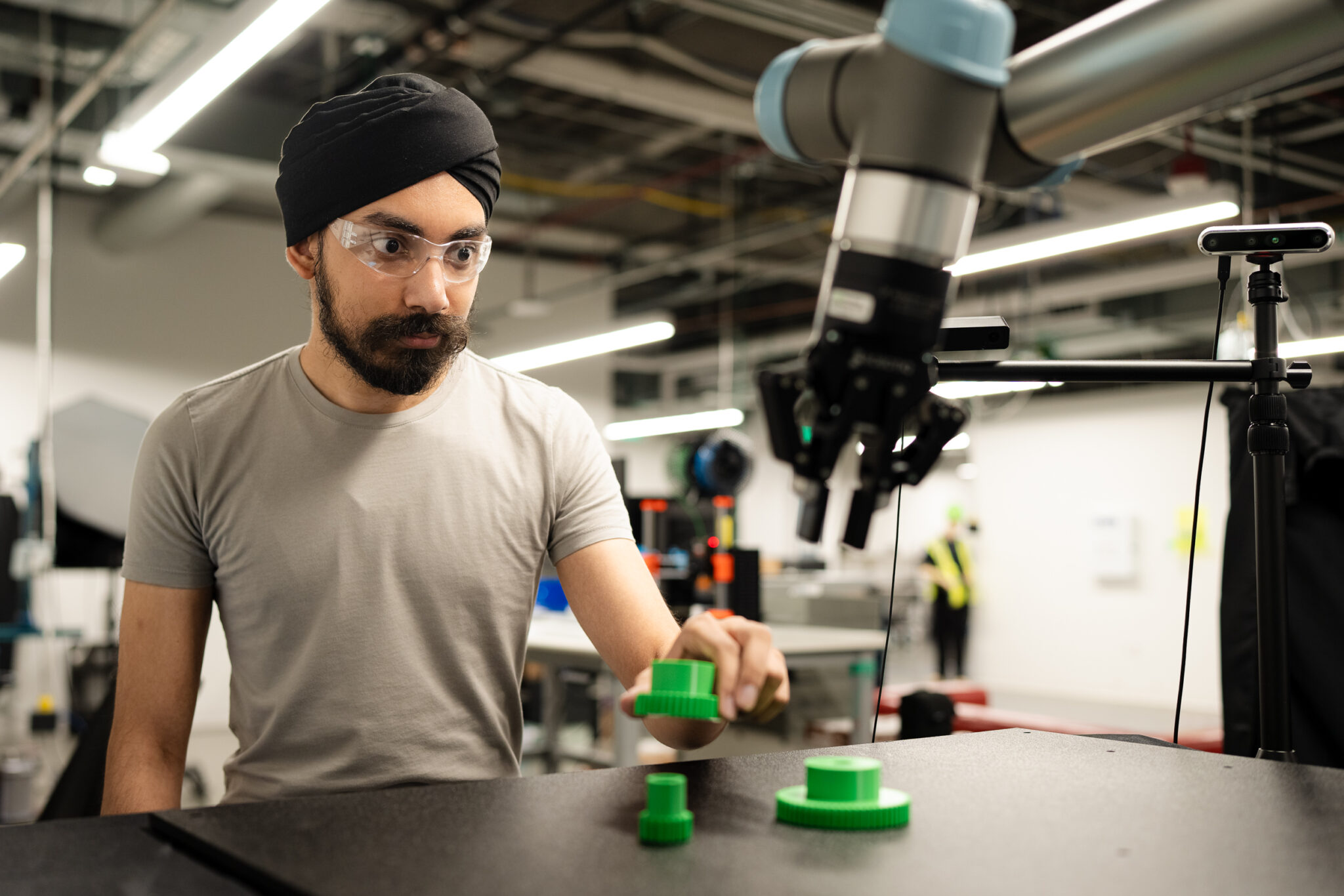
As a robotics software engineer who leads the team behind NVIDIA Isaac ROS (Robot Operating System), Singh works on the connective tissue of the physical AI era. Built on the open source ROS 2 framework, Isaac ROS brings CUDA-accelerated libraries and AI models to developers building autonomous mobile robots, manipulation systems and humanoids.
“My goal is to make sure everyone feels like they are a part of the robotics future,” Singh said.
For Singh, that future began in middle school, building with LEGO Mindstorms, a popular line of programmable robotics kits. After excelling in robotics competitions throughout high school, he studied electrical engineering, computer science and business at the University of California, Berkeley, before joining NVIDIA full time after an internship with the robotics team.
“We wanted to see what would happen if we just released some software as open source that uses the NVIDIA Jetson platform and NVIDIA CUDA libraries for robotics. Would there be any value there?” Singh recalled. “And the answer was, of course, yes, because developers always want to be able to unlock the full power of their GPUs.”
Physical AI has long been a field of extraordinary imagination and stubborn, physics-bound realities. A clip of a robot dancing or executing complex balletics can travel the internet in hours. Building a system that works repeatedly, across sensors, platforms, factories and labs, is slower business.